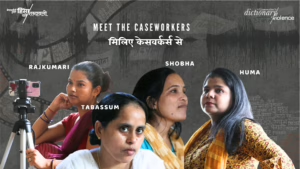

The four caseworkers though are relatively new to doing casework but succinctly put their personal journey in words being integral part of the organisations, focused on gender-based violence cases.
“When a judgement is passed or a decision is taken on someone’s behalf, until she is asked about her own desire, nothing should be done because otherwise she will feel suffocated.” says Huma. Tabassum’s family doesn’t approve of her work but it is her decision to do it and she stands by it. Meanwhile, Huma feels since she started doing casework, she is not the same person she used to be and that her family vouches for her transformation.
Shobha has also come into her own and is recognised locally because of her work. For Rajkumari, there is no place for backing down as they have been rigorously trained and guided into becoming a caseworker. She feels lightness while sharing her story as she lets out heaviness from her system.
In 2022, we started working with 12 caseworkers across Uttar Pradesh, locating them as creators of knowledge around violence. With them, we created a vocabulary around gender-based violence (GBV) emerging from the grassroots, which is now live as the Caseworker’s Dictionary of Violence. The lexicographers for this dictionary are from Lalitpur, Lucknow, and Banda, with days, nights and decades of working cases that may have disappeared from history, if it wasn’t for them.
In our series, Meet the Caseworkers, we spoke individually to these 12 caseworkers. They trace back their lives and times, their epiphanies, their regrets. They also share tools and strategies for other grassroot workers working with violence.
-
The Third Eye is being written and developed by a team of educators, documentary filmmakers, storytellers; people with extensive experience of gathering narratives, oral histories and developing contextual pedagogies for the rural and the marginalised.