
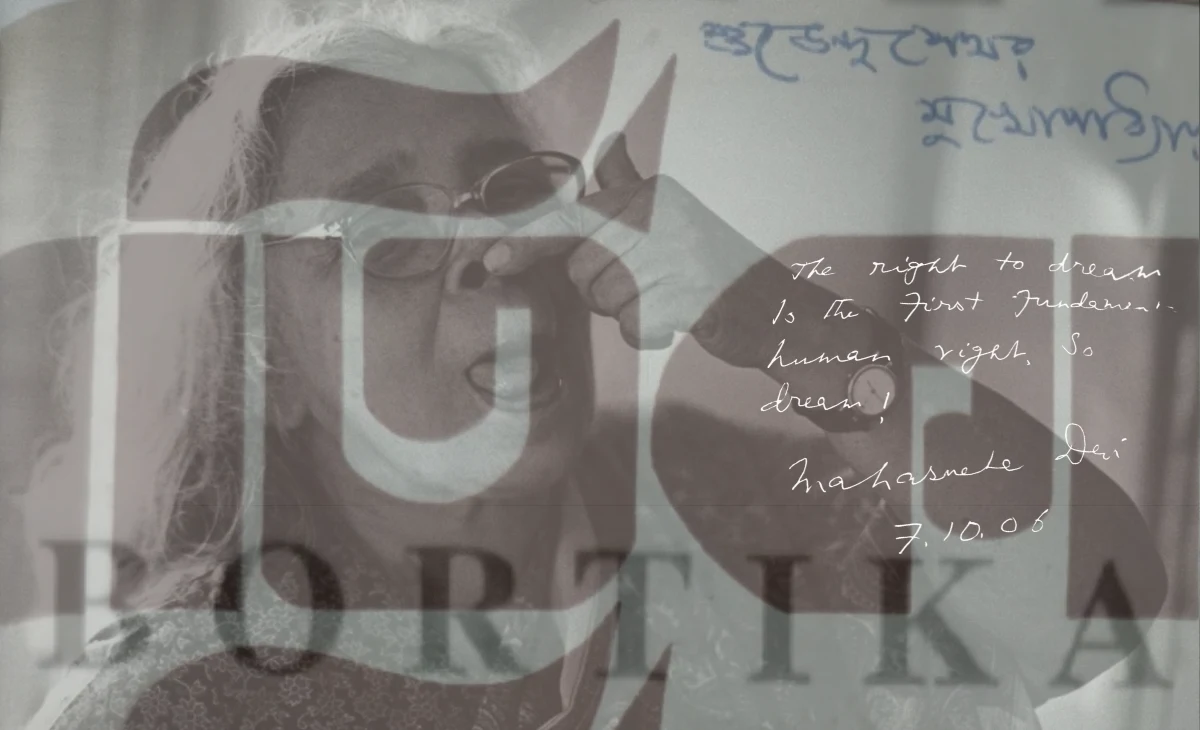
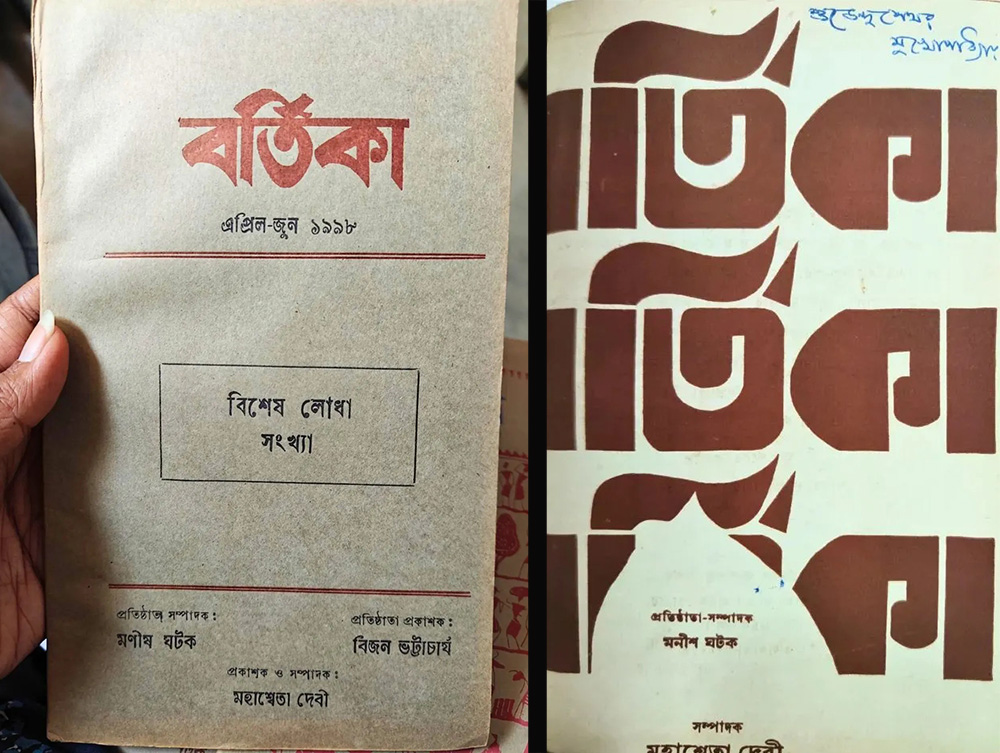
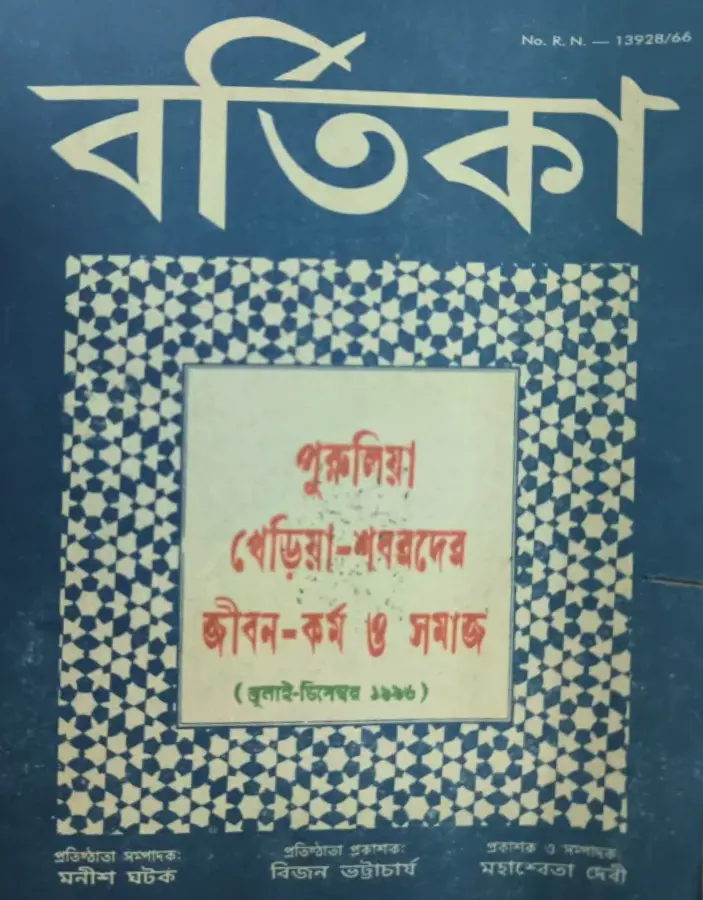
Writer Mahasweta Devi inherited a quarterly journal from her father that published poetry and essays — a well-meaning publication in the ‘Bhadralok’ register. In her hands, Bortika (meaning ‘light’) metamorphosed into the voice of the dispossessed: seeking writing from rickshaw-pullers, shift workers, Adivasi school-teachers and well-informed village residents. In this research-based essay, film critic and author, Sohini Chattopadhyay, looks back at the archives of Bortika and reflects on what it meant for a literary magazine to publish writings of working classes as well as elite academics, alongside each other.
By now, this story is quite well-known. One afternoon, the celebrated Bengali writer Manoranjan Byaepari was waiting with his rickshaw at the stand near Jyotish Ray College in Bijoygarh, deep in south Calcutta, when an elderly woman came out of the college and asked for a ride to go home. Byaepari did not know she was the writer Mahasweta Devi, but he knew she taught at the college. So, he asked her the meaning of the Bengali word ‘jijibhisha’.
“The will to live,” the woman replied. “Where did you come across this word?”
“It is in this book I am reading,” Byaepari responded.
“How far have you studied?” Mahasweta asked him.
“I have never studied actually,” he said.
“But you read books?” the woman pressed on.
“I have learnt to read on my own,” he said.
“Name some books you’ve read?” she asked.
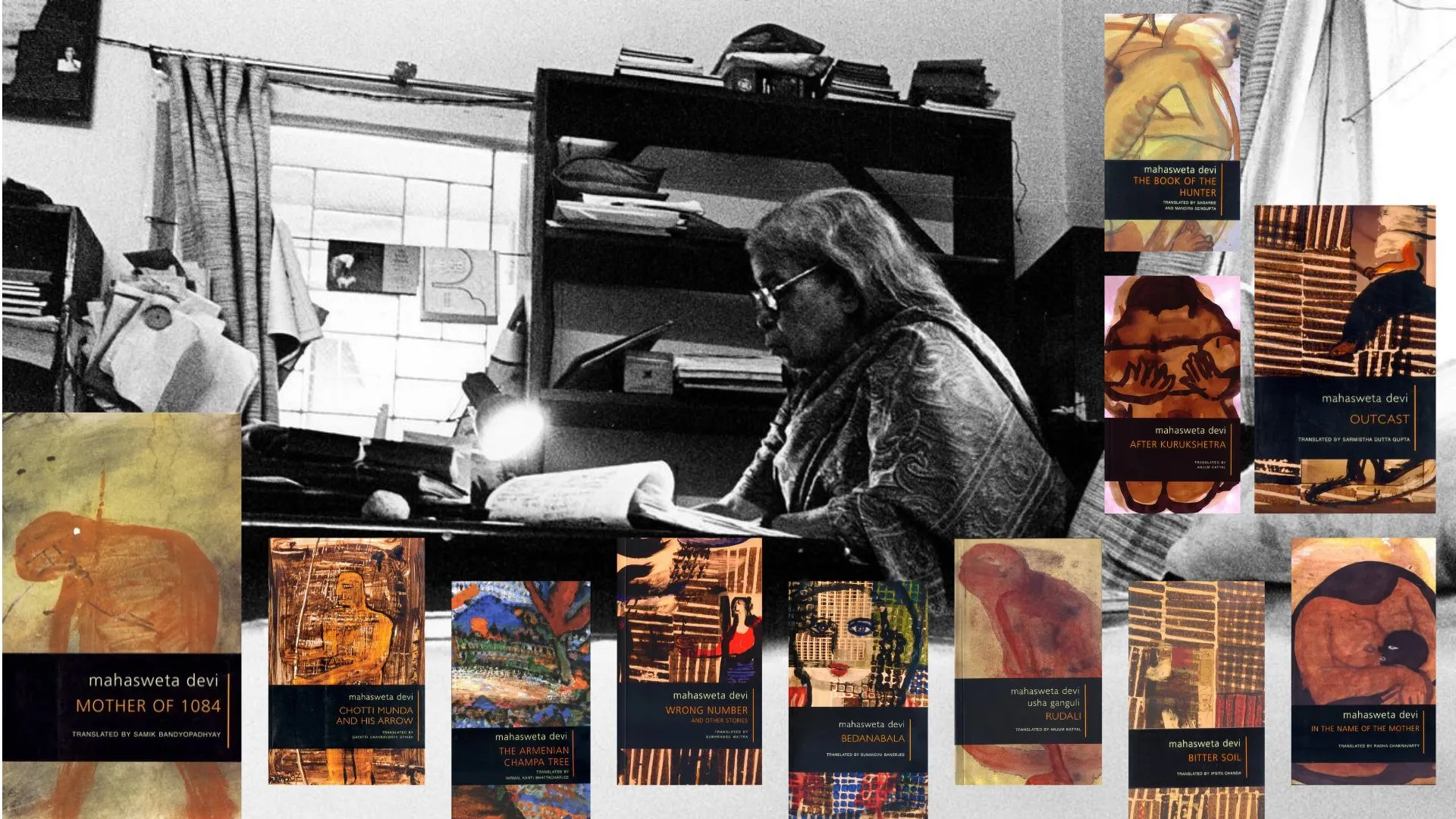
Byaepari named 8–10 books, of which half were authored by Mahasweta Devi. The 1970s was a decade she had achieved major renown, thanks largely to her novella Hajaar Churashir Ma (Mother of 1084), although it was her next novel Aranyer Adhikar (literally, The Right to the Forest) that won the Sahitya Akademi award.
When she got off the rickshaw, Mahasweta introduced herself. “I run a journal where people like you write; people who do not have much formal education. Why don’t you write for it?
“I have never written anything,” Byaepari remembers telling her. “But I read a lot.”
“Why not write then?” Mahasweta asked.
The next part of the story is lesser-known. Byaepari would publish a personal essay titled ‘Rickshaw Chalai’ (translation: I Pull a Rickshaw) in the July-September 1981 edition of Bortika. In 1983, he would publish a second essay titled ‘Bidyadhori Chawr-er Upokawtha’ (translation: The Fable of Bidyadhori Sandbank). When I started working in the Mahasweta Devi Sangrahashala in Kolkata, the material I was first given access to were issues of Bortika. My first thought was to look for Byaepari’s writing. But it would be weeks before I would locate it, recognising it by the rickshaw-puller in the title, because the story was credited to a Madan Dutta. But the writing was unmistakably his; not for the compelling straightforward style he would develop in his best-known works, but because of the material of the essay.
“I have not had a chance to be formally educated as my father was a refugee who refused to go to Dandakaranya [the official refugee camp for lower caste East Bengal refugees]. As a result, he did not receive welfare from the government. At an age I should have been going to school, I earned Rs. 3 a month, herding 13 goats and 4 cows to help keep my family fed…When I grew older, I worked variously as tea boy, domestic servant, mason’s aide.
***
Those who say poverty is no hindrance to education have not seen the world from my location. I have learnt 40-45 types of work — I am 31 years old now. I can drive a car, I know the work of a lorry driver’s helper but I haven’t been able to secure a driver’s licence due to lack of money. But whenever I find time in the middle of work, I read. At first, I needed to spell words out to read, now I can read easily. I enjoy fiction. In the midst of ferrying passengers on my rickshaw, I read. I have read nearly every well-known writer in Bengali, I have also read world literature translated into Bengali. But the books I enjoy particularly are those which speak of the lives of ordinary folks like myself, with a revolutionary consciousness, with a perspective to resist injustice, with the objective to break the iron chains of the system and achieve success. Like Maxim Gorky’s Mother, Spartacus, Aranyer Adhikar, Arafat and Palestine Commando. I watch most films but the ones that have left a mark are Calcutta 71, Padatik, Doud and Sansar Seemante.” [Byaepari’s highly acclaimed book Interrogating My Chandal Life: An Autobiography of a Dalit speaks of the Marichhjhapi Massacre of 1979 by the Left Front government in West Bengal, perceived to be a regime sympathetic to refugees from erstwhile East Bengal. Byaepari’s work, in this and other writing, has shown there to be a sharp difference in the Left Front’s attitude toward upper-caste and lower-caste refugees.]
“The reaction to that first published piece gave me what I needed to become a writer. Students and even professor of Jadavpur University came looking for me to see if it was really a rickshaw-wala who had written that piece,” Manoranjan Byaepari said, over the phone. “There was even a mention of my essay in Jugantar [newspaper] which reviewed that issue of Bortika. Many magazines asked me to write, and I wrote as Madan Dutta, as Jijibhisha, under so many pseudonyms. I was still worried; I had been in and out of jail a few times, and I did not want to use my own name.
I also used to work as a cook at that time. And I thought no one would keep a cook who is a writer.”
What is curious is that there have been journals in Bengali that identify as Dalit platforms. In a piece for the Economic and Political Weekly in 2007, co-authored with Meenakshi Mukherjee, Byaepari traced the history of Dalit journals of the Bengali Matua movement in the early twentieth century, which published magazines such as Namasudra Suhrid and Pataka. But these did not have a wide readership or much play in the literary discourse. Byaepari dates the Bengali movement to two decades after the Marathi Dalit writing movement, which took off after 1958 — the year the term ‘Marathi Dalit writing’ was first used. Yet, it was not a Dalit journal where Byaepari, the first bestselling Bengali Dalit writer was launched as Bimal Biswas, editor of Adal Badal says.
“I came to know about these journals much later, in the 2000s, when I was made aware of the Dalit writing movement in India. Bortika’s identity was not Dalit, but rather, subaltern. Moreover, it had Mahasweta Debi’s name associated with it. Dalit journals were uncomfortable with me for a long time because I identified first as a Marxist, and much later as a Dalit. The relationship between these communities is of mutual dislike. Bortika was for people of lower classes — from all identities. Now that I identify as Dalit, I think Marxist spaces are less open to me.”
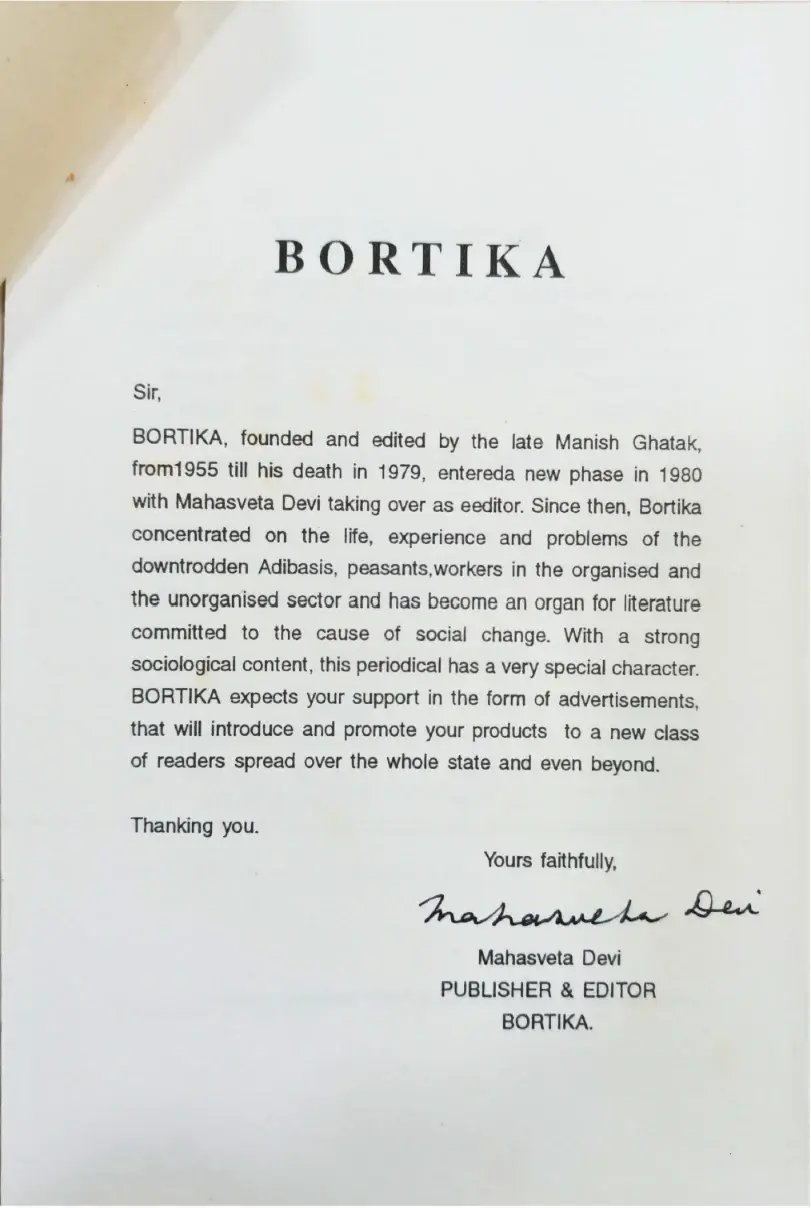
Mahasweta Devi would publish a seven or eight-page-long call for writing, with this heading, in her magazine from time to time — say once a year. The quarterly Bortika was started in 1955 by Manish Ghatak, Mahasweta’s father, a successful tax lawyer and a reasonably-regarded writer of short fiction and poetry. In his hands, Bortika was a typical Bhadralok (literally, ‘gentlefolk’, referring to the educated, cultured, upper-middle class Bengali) publication of poetry and essays, most of them middling — almost all of them by Mukhopadhyays and Bandyopadhyays and Chattopadhyays. Mahasweta Devi inherited the magazine after her father’s death in 1979. And changed the register radically.
Can the Subaltern Speak? Spivak and Mahasweta’s dialogue
In 1985, Gayatri Chakravorty Spivak would write the essay that remains one of the most-referenced arguments in the humanities today: ‘Can the Subaltern Speak’, listed as having 47,839 citations under a number of links on the internet (as of June 2026). My interpretation of Spivak’s enduring argument is that the subaltern speaks, but the intellectual (the makers of discourse) does not listen. Or, lacks the capacity to understand what they are listening to. And so, the intellectual speaks for the subaltern, framing their speech with their own perspective. Recent scholarship by Amin, Suhrud and Todi (2022-2025) suggests that one individual who listened to the subaltern, took notes and made it the basis of his political organisation, was MK Gandhi in Champaran in 1917. These notes — taken by hand by Gandhi, India’s first president Rajendra Prasad and other lawyer associates of Gandhi — lay bundled in the National Archives of India and formed the basis of changes to the pattern of indigo cultivation in colonial Bihar (and the material of the Thumb Printed volumes).
Gandhi may have listened to the subaltern earlier, but Spivak was among the first to articulate this relationship between voice and power.
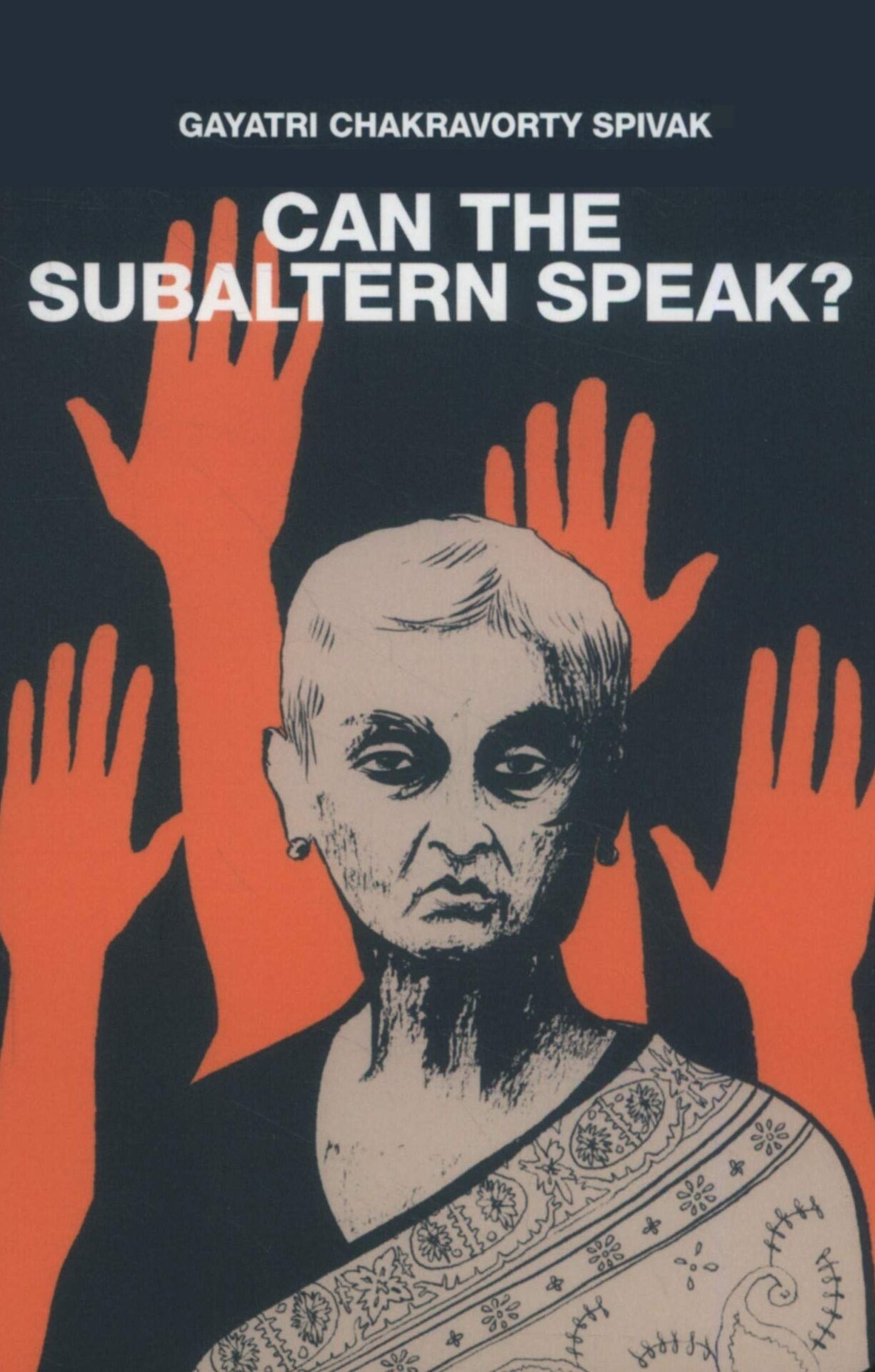
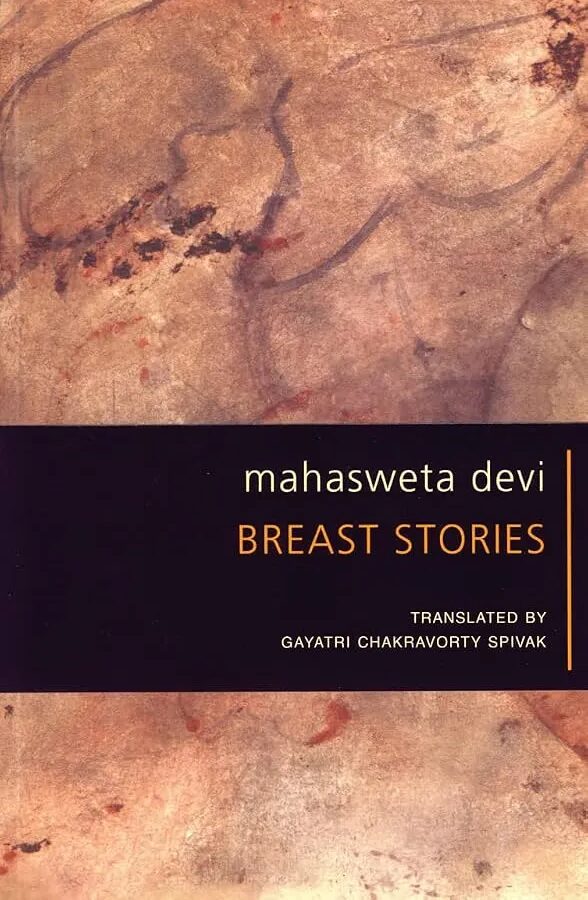
In her contribution to Subaltern Studies Vol V, Spivak would take this argument in another direction, extending the subaltern narrative from history to literature, specifically writings by Mahasweta Devi. “Those who read or write literature can claim as little of subaltern status as those who read or write history,” she writes. There are elements of imagination and research in both history and literature; history also involves the imagination and fiction does not preclude research. She would translate Mahasweta’s short story ‘Stanadayini’ (Breast Giver) and hold it up to argue that a story like this renders the subaltern’s voice as authentically as the historian’s account — of the peasant forced to grow indigo by the British, for instance — gleaned from archival materials.
Spivak’s argument on the subaltern was, then, shaped in part by Mahasweta.
To ask who influenced whom more, or who articulated the idea first, feels like an unintelligent, unproductive exercise. Mahasweta and Spivak met in the late 1970s after the publication of Hajaar Churashir Ma (Mother of 1084), as per cultural critic and translator Samik Bandyopadhyay, who arranged this meeting. He was a classmate of Spivak’s in university, and a colleague and friend of Mahasweta’s. However, the evidence from Bortika and Spivak’s writing suggests that both shaped each other’s ideas.
Not only must the subaltern be heard, Mahasweta Devi thought, she also gave them the mic so that the voice carried. That microphone was Bortika.
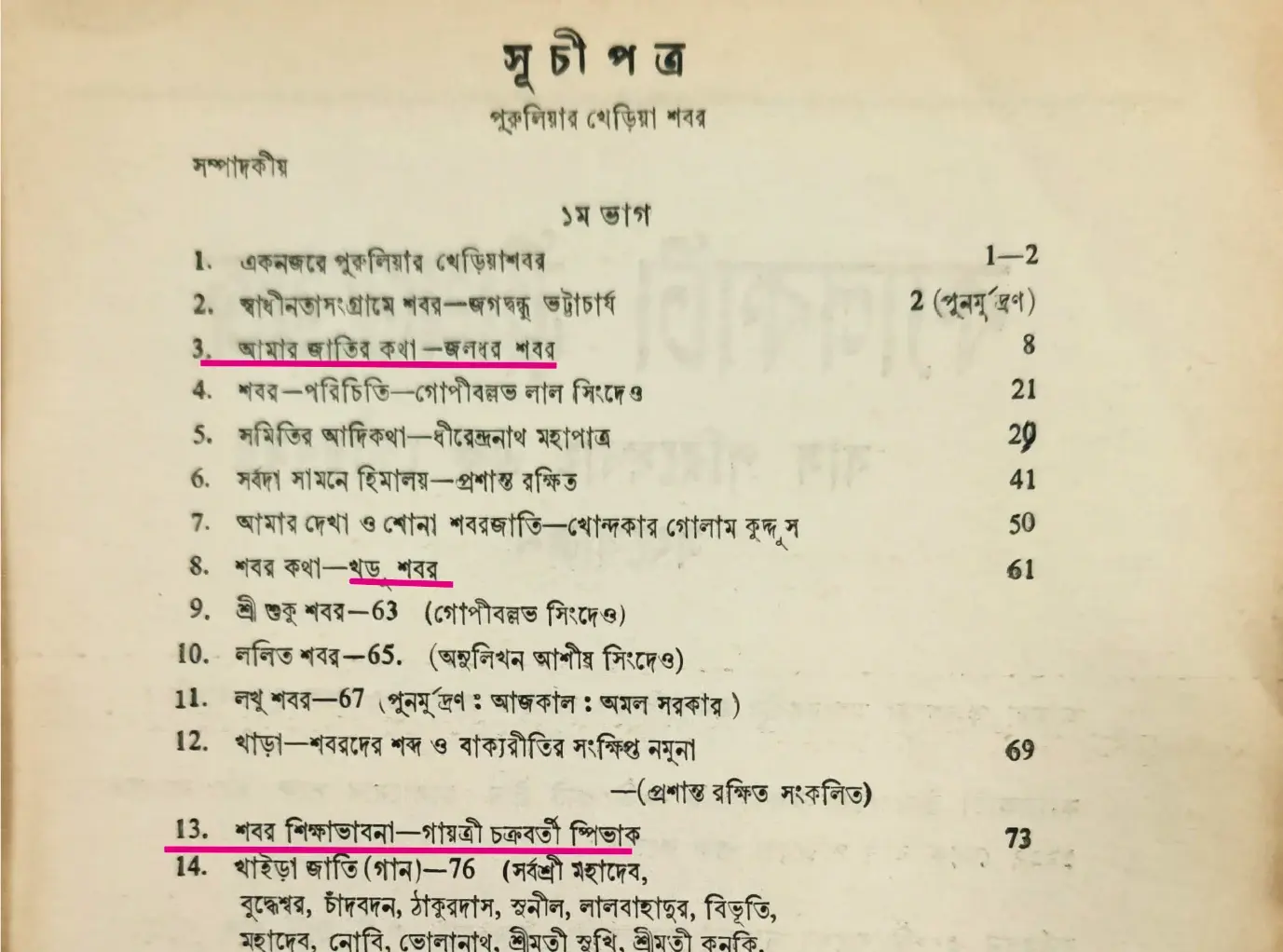
“By way of Mahasweta’s political generosity,” writes Spivak in Imaginary Maps (1995), “I have had the good fortune of encountering a handful of contemporary tribal intellectuals among whom two have seemed to me to have perhaps traversed the hardest road: Chuni Kotal and Jaladhar Sabar. Chuni, as a woman daring to breach the general ‘intellectual’ establishment, took her own life under the weight of social prejudice. [Kotal and Sabar have both published in Bortika]… Mahasweta has published what amounts to politically interventionist and informative testimonials in her journal Bartika for years, without making a noticeable mark upon the general reading public in West Bengal, let alone enthusiasts of multiculturalism and Cultural Studies in the United States.”
***
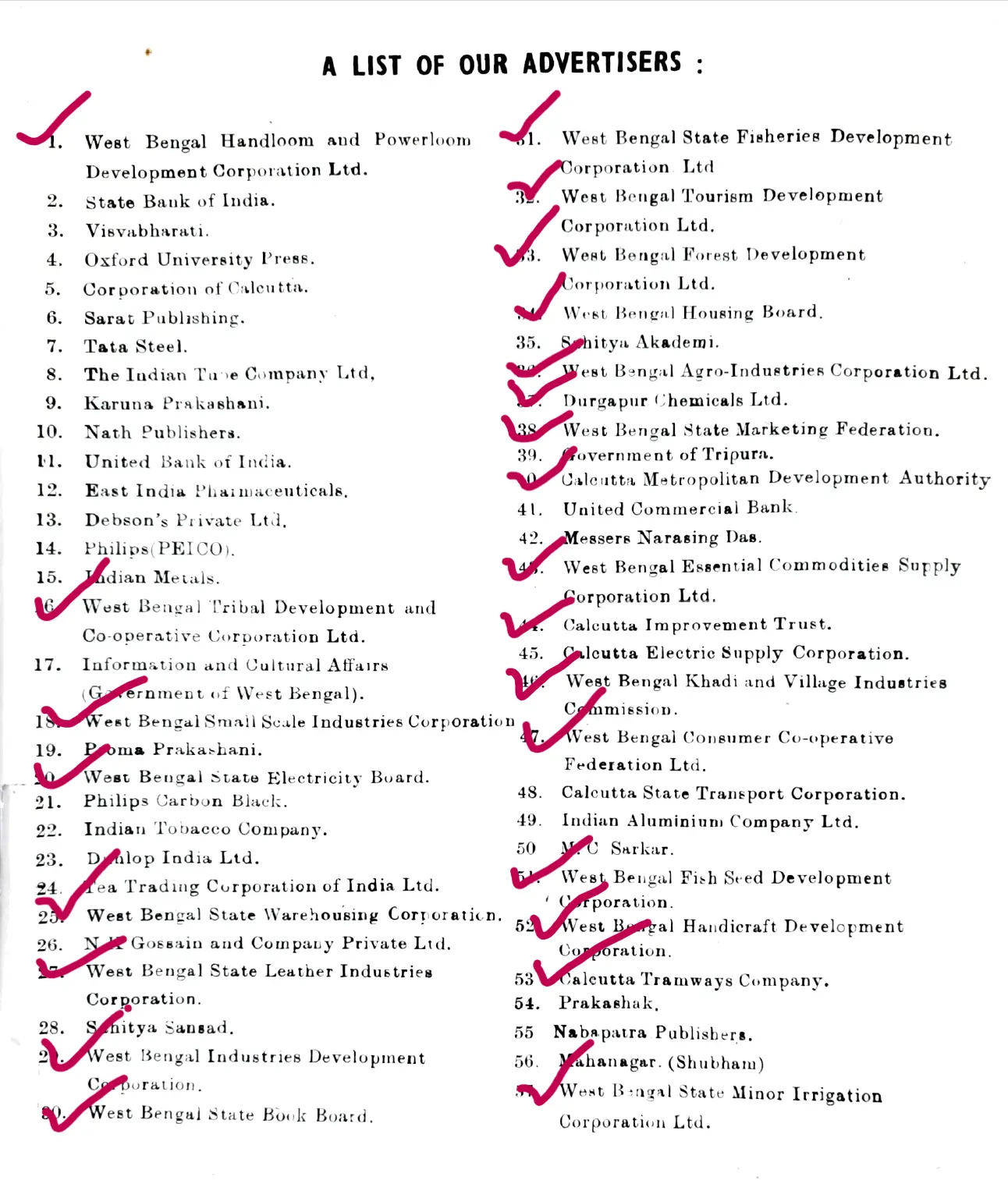
“You write your own stories. Bortika is open for you,” Mahasweta Devi says, in the Sahitya Akademi documentary on her (available on YouTube). The magazine “concentrated on the life and experience of Adibasis, peasants, workers in the organised and unorganised sector,” she writes in the material she put out to solicit advertisements. In her hands, the story menu of Bortika looked like a social justice dream realised: a Chuni Kotal from the denotified Lodha tribe (listed as criminal tribe under the British administration) or a Sabar from the Kheri Sabar DNT tribe listed next to Professor Gayatri Chakravorty Spivak or Professor Ganesh Devy or Mahasweta herself. Or a Manoranjan Byaepari in pseudonym.
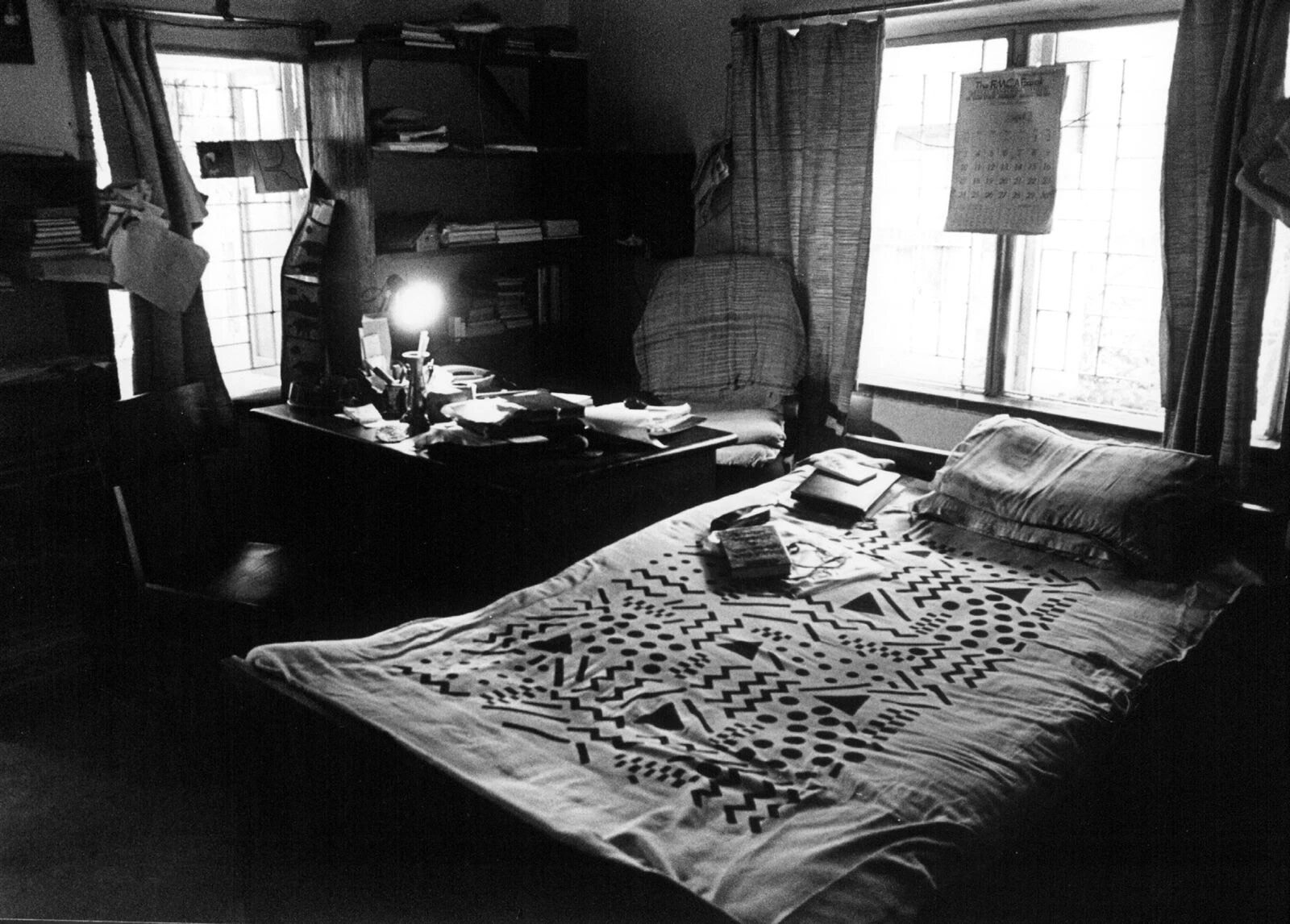
Did savarna Mahasweta, who came from one of the most illustrious families of modern India, corner the mic from the Adivasi?
Consider the evidence: her paternal uncle is the filmmaker Ritwik Ghatak, her maternal uncle Sachin Chaudhuri is the founder of the Economic and Political Weekly. Another maternal uncle Sankho Chaudhuri is one of the most influential abstract sculptors of modern India, who set up the sculpture department at the storied Maharaja Sayaji University of Finer Arts at Baroda.
This question may not have been asked in the 1970s, 80s and 90s, but it would certainly be posed today — when a generation of Ambedkarites and Periyarites has come of age and voice, post the implementation of the Mandal commission recommendations. Bortika gives an excellent answer: she organised the platform for the subaltern to speak alongside her. The contents pages of the journal can feel like what would be a progressive publication’s fantasy even today.
This is different from Gandhi’s exercise with the peasants in Champaran: his project in testimony-taking was not meant for public circulation. Rather, it was meant for limited internal circulation as the evidence to shape a movement and change government policy. Mahasweta Devi’s Bortika was expressly meant for the public sphere. Its testimonials spoke directly to the public, not to the activists and officials who move levers of government, aiming for a different form of social impact.
It was also, probably, more than that. It is possible that Mahasweta drew on the testimonials and personal stories in Bortika’s writing for her own work in the best possible sense, in the way that all creative work is influenced by existing material. It gave her a greater range of authentic material to work with, in addition to the reportage she did from the ground.
Bortika would publish special issues on subjects such as the Kheria Sabar tribe of Purulia, witch-hunting in Adivasi areas, the suicide of Chuni Kotal of the Lodha Sabar tribe, women in the Telangana movement, locked-out factories and the consequences for their labour. Some of these issues came with detailed data charts of the citizens in the district (in terms of education, family size, income and other socio-economic data vital for policy-making and implementation), the kind of vital information that the Indian state barely puts out even in the age of internet. In this case, Bortika was an act of resistance in addition to an accomplishment that equalled the work of several government departments. In the words of Maitreya Ghatak who edited the English language collection of her reportage Dust on the Road, “Mahasweta Devi was a one-man resource center.” The magazine began to lose steam after Maitreya’s death in 2003, although it kept going haltingly until the early noughties.
***
The first piece I read in Bortika was a personal essay by Chuni Kotal, first published in 1982 when she had finished her Class X exam; I read it, however, in a special issue published in 1992 devoted to the memory of Kotal. She was the first person from the Lodha community of Purulia (a denotified tribe) to graduate Class X, then higher secondary, then a university bachelor’s degree.
“We could not afford paper, pen, ink. There was an ink tablet available for 10 paise, which dissolved in water; this is what we used for ink. We would search our Borhda’s [eldest brother] old notebooks for blank pages. Occasionally, Ma would buy us a sheaf of paper or Borhda would, and Chhodh da and I would divide these between each other. Even so, when we submitted work on the few pages of paper we managed, the schoolmaster would fling our work away. I would do sums on my slate, and there was one room in our home with a cement floor—there, I did long sums. I could not present this in school of course, and was typically made to stand on the bench as punishment all class.
***
Finally, I devised a solution of my own. I would divide my dinner into two parts and eat one part at night, and the other in the morning. This way, I would save some money from breakfast. Five days’ breakfast was enough to buy some paper. But eventually, my Chhorhda noticed and would watch me keep aside half my dinner like a pet cat. And in the morning, I would find there was no food where I had kept it.”
16 August 1992, Chuni Kotal would die by suicide while enrolled for her master’s degree in Vidyasagar University, crushed by the treatment meted out to her by the university and West Bengal government.
She worked as a superintendent in a government hostel for Dalit and Adivasi women in Medinipur.
Mahasweta would write on Kotal in the Economic and Political Weekly, charging the Left Front government with apathy and prejudice towards denotified communities. Her suicide received press coverage (probably thanks to Mahasweta’s involvement) and became a moment of public reckoning in West Bengal, self-declared by upper-caste Bengalis as a casteless space.
A special issue of Bortika titled ‘In Memory of Chuni Kotal’ was published that very year, dated July-December 1992. (It is likely that a small magazine like Bortika often ran behind schedule.) It included a piece by herself and one by Kotal’s brother Sankar, easily the most moving of the lot.
“On the day [of Saraswati Puja], students would gather flowers and bael leaves after waking up, take the rice and fruit their families gave them and make their way to the mandap and offer these. After the prayers, the priests would ladle return some of this as prasad on each thali offered to the goddess. Chuni got the impression that if she too could offer rice and fruit to the goddess, she would be bounteously blessed. Our ma gave her what best she could manage — 250 gm of rice, two guavas, a ripe banana and a papaya from our tree at home. Chuni took this thali and placed it at the mandap, and wandered around. Before this, no one from a so-called lower caste had offered food at the puja mandap.
When the prayers were over and the prasad was to be distributed, I went to the mandap, received a serving and carried it away to eat at some distance, under the shade of a tree, because I was worried my eating at the mandap might be considered polluting. I must have been 12 or 13 years old then, Chuni 10 or 11 years.
Suddenly, I heard a commotion. I finished eating quickly and made my way to the source of the noise. A man from our village was shoving Chuni, repeatedly saying aloud “she was eating the prasad inside the temple, instead of taking it home!” I watched him push her all the way to the outside of the temple premises. When she caught sight of me, she ran to me, “Chhot da, our prasad thali is still inside. Please get that back.”
From a distance, I called to another man we knew from the village to return our thali. The man immediately went inside and came out with our small kansa thali. ‘Here, take your thali,’ he said.
As soon as I came to collect it, he flung the thali in my direction. It landed some distance away with an ugly clang, Ma Saraswati’s prasad fell to the ground. I had felt then that I would break their temple with the same force as they had flung our thali. But that day we swallowed our humiliation and came home crying, carrying the dusty prasad with us. Ma Saraswati, you give us justice, we had said to ourselves.
Together, brother and sister’s testimonials give us a picture of how multi-tentacled the discrimination faced by denotified tribal communities is, particularly in our caste society where birth continues to determine our place in the world to a large extent. The poverty is not economic alone; indeed it may be the social humiliation that hurts more.
In the same essay, Sankar writes of how they had come to know Mahasweta.
Dear Sankar and Chuni,
You don’t know me but please know that I am your didi. Please get in touch with me as soon as possible.
— Mahasweta Debi, 18A Ballygunge Station Road
Letter in hand, Chuni came running to me. “Who is Mahasweta Debi?
[Mahasweta published Chuni Kotal’s first piece in Bortika in 1982]
Brother and sister would take up the invitation to go to Calcutta, where they stayed some days in Mahasweta’s home.
She reimbursed their travel expenses (and made for them what Sankar calls the best meal of his life.) A warm anecdote that also tells us that Mahasweta did not rely on the calls put out in Bortika alone to seek writers. Who knows if rickshaw-pullers and shift workers and Adivasi schoolteachers actually got their hands on Bortika? She didn’t leave it to chance. She also put in the groundwork to seek out subaltern voices.
***
How would I, an upper-caste Anglophone reporter, have reported Kotal’s story? Would I have succeeded in drawing out the extent of their impoverishment? Perhaps, if she trusted me to share every detail, and perhaps not. I may well have been witness to an incident such as the one her brother Sankar describes, but how would I be able to access Sankar’s humiliation and rage? Despite my best intentions, given my caste and class location, I would likely have seen them as victims, perhaps romanticising them, but would I see them as actors responding to their humiliation with the full force of the human heart? Perhaps and perhaps not. The outsider is fabled for seeing what those within a situation cannot, but the outsider cannot replicate the position or perspective of the insider. They can only report what they understand of a situation. Why do we diminish the insider so? Is it the legacy of the colonial project, institutionalised as academic or professional training?
Twenty years ago, when I worked at an English-language news weekly, the editors encouraged voices from the ground in the “As told to” format. It was thought too laborious to seek out and edit the writing of such writers. This practical thinking carries an inbuilt condescension — a working class person cannot be a good writer, hence we have to write on their behalf. But in Hindi, the internet gives you the instance of Hans magazine, birthed by Munshi Premchand, and rebirthed by Rajendra Yadav in 1986, in whose hands it actively sought out Dalit writers. Hans is widely considered to be the best Hindi magazine. Byaepari spoke of the Bengali magazines Adal Badal and Ekhon Takhon — the former open to all marginal identities, not only Dalits. From 2000, Arun Selva, a journalist who dropped out of school in Class IV, has been (with some gaps) bringing out a magazine called Slum Jagattu to document the experiences and concerns of slum residents. There may be a couple more that I was not able to access.
Nevertheless, the argument stands: publications that publish the subaltern are still only a handful, close to 46 years after Mahasweta took over Bortika, and demonstrated how a magazine can work towards social justice.
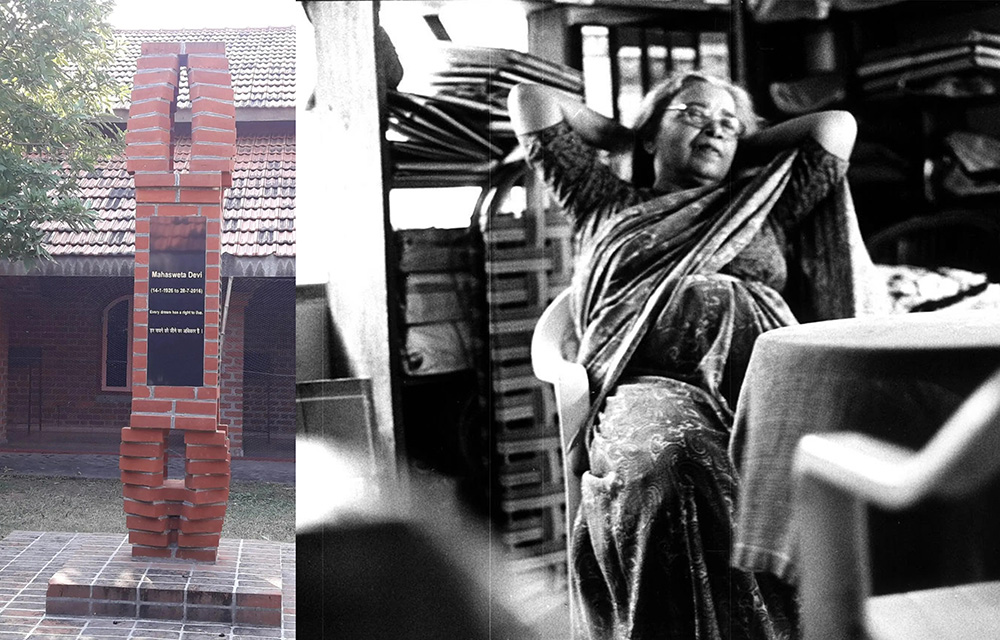
Was Bortika perfect? Pretty close, I would say, but it would not do Mahasweta justice if I left out what she could have done better. Unlike Hans, she did not publish fiction by her newly-discovered subaltern voices. She published only their personal essays and reportage. Yet Bortika did publish fiction — primarily by her own family. It suggests a hierarchy in her mind about who was capable of imagination and fiction, and who was best suited to describing the personal conditions of their life.
“There were also other writers whose stories she published; I remember Abhijit Sen. When I submitted a story, she said we publish reportage and analysis. That is the reason I stopped writing for it for many years, because I wanted to write stories,” said Byaepari.
In other words, there was gatekeeping to separate those whose fiction was deemed worthy of publication from those who could publish testimonials and reportage.
Mahasweta and her chosen editorial associates — her brother Maitreya Ghatak and partner Nirmal Ghosh — retained editorial control. Despite genuinely progressive thinking, Bortika was, in the end, a project of representation — a high-quality one — but not one of restructuring, or indeed, dismantling power hierarchies.
If that was the case, she would have outlined a plan to hand over the magazine to someone like a Manoranjan Byaepari, a name to reckon with, and stepped away in good time. Most Indian institutions, be it an industrial group or a school or a magazine, are handicapped by founding figures who are unable to relinquish control. But if anyone could be expected to take the road seldom taken, it should have been Mahasweta Devi.
-
Sohini is working on Mahasweta Devi's biography. She is a National Award-winning film critic and the author of the book The Day I Became a Runner, which maps women's citizenship in India through the lens of sport.