
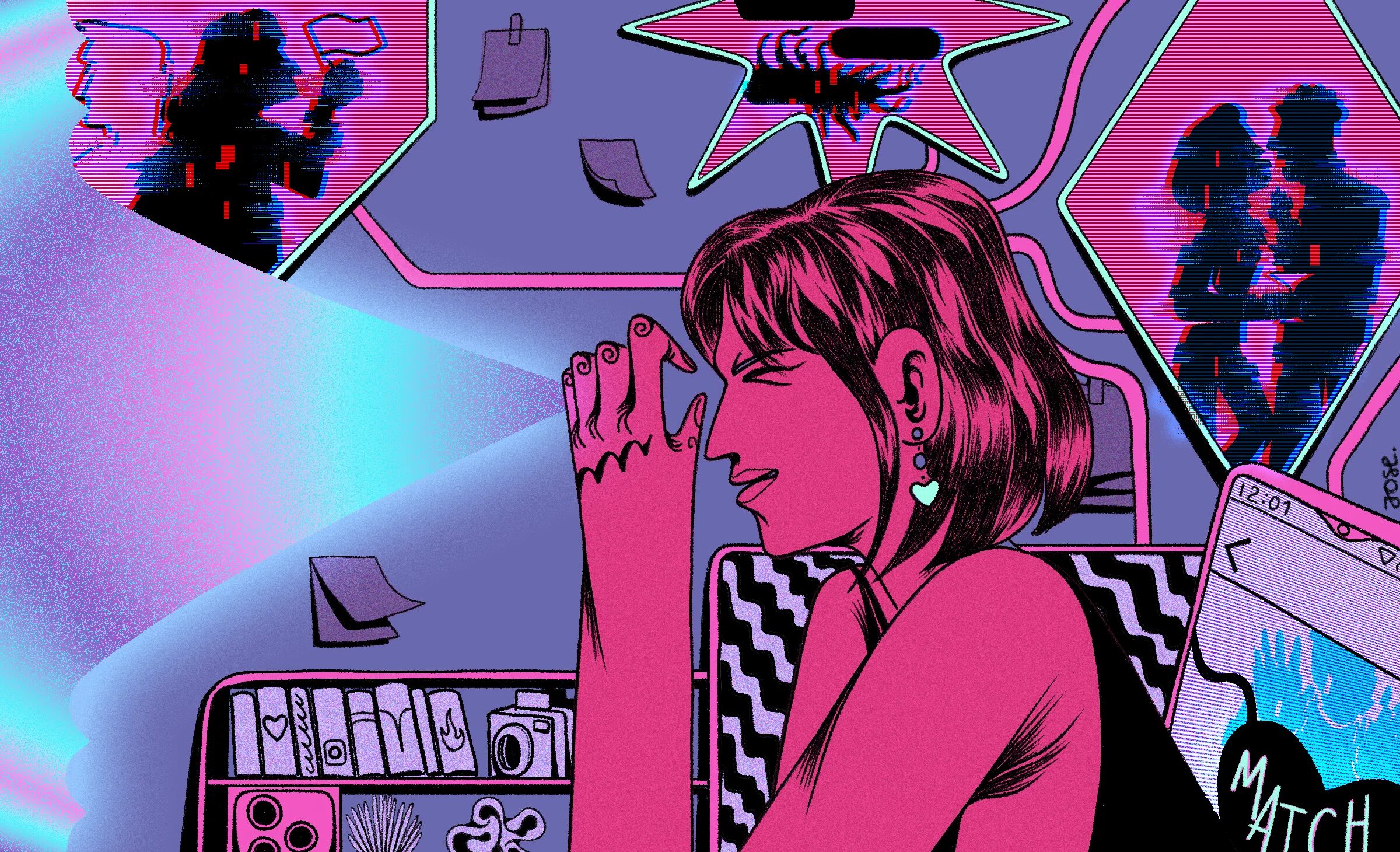
The digital world was supposed to give us the freedom to exist as we are, as who we can be. Yet, we’ve seen patriarchal structures underlying the way intimacy is shared online. Dating apps animate the romance of seeing our fullest selves — but do they continue to be liberating opportunities? Or is this one more way of getting locked into an identity? Bonita Rajpurohit’s film iykyk (2024) follows the story of Kusum, a young trans woman who’s looking for ‘the one’. iykyk is now streaming live on brewtv.
Her trans-ness fascinates her dates — all young men — but only insofar as it piques their curiosity or allows them to explore their own assumptions about her. Expected to perform her ‘self’ for the expectations of heteronormative dating, Kusum begins to tire. We spoke to Bonita about the making of her film, the continuity between her real and ‘digital’ self, and what constitutes the Gen Z dating experience.
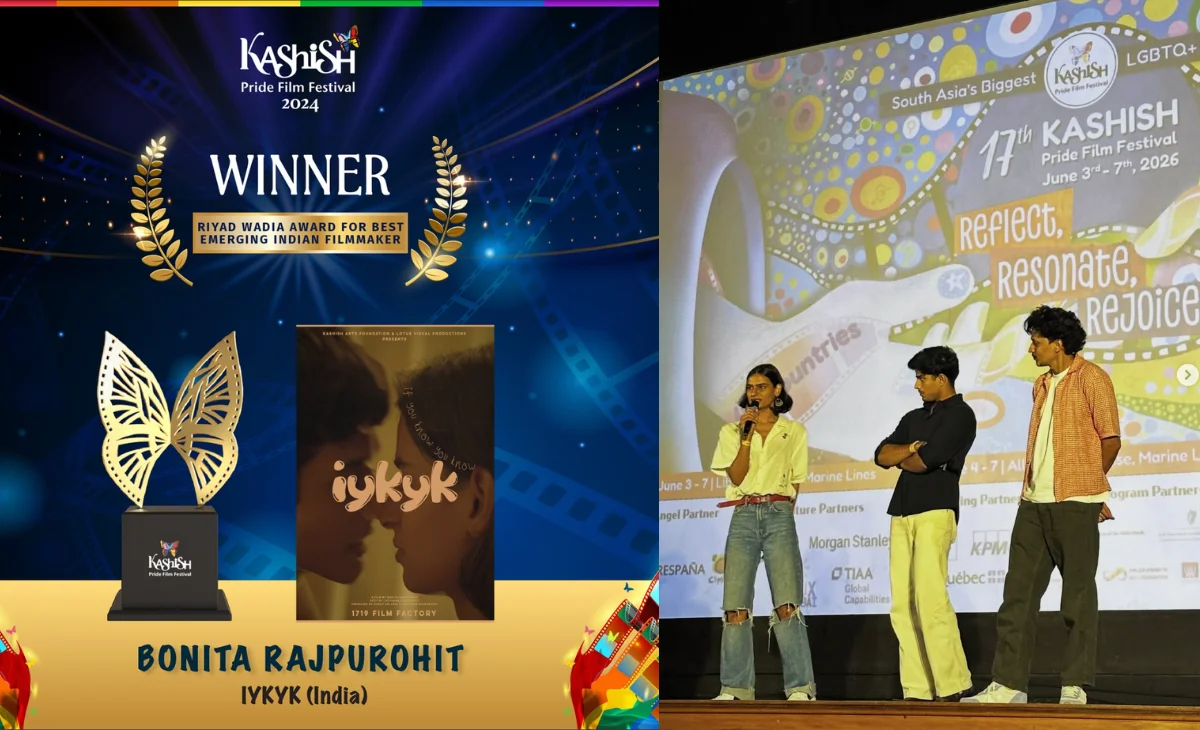
TTE: Your film iykyk (if you know you know) was screened at the 2024 Kashish Pride Film Festival, where you also won the award for Best Emerging Indian Filmmaker. The film addresses something we’ve also been interested in, through our fieldwork — the contradiction of the liberated ‘self’ in the virtual world, alongside the sheer force of heteronormative standards that we can’t seem to fully escape, especially on dating apps. What were your entry points when conceiving of this film?
Bonita: When it comes to finding myself, movies have played a significant role in my life. When I watched Lukas Dhont’s Girl (2018), seeing somebody portraying a character who has lived a life like mine had a very big impact. Coming from rural Rajasthan, films like Kill Bill (2003) were my first introduction to cinema, and also to myself.
I wanted to be part of cinema and gradually started doing that. [When I started auditioning] I realised that all the roles in the scripts I was getting were very similar. Not that all those stories don’t matter… but I felt like there was more to it.
At the same time, I grew up on the internet. It gave me a canvas to make a painting of my own, to be the way I want to be.
I could not practise being myself publicly; on social media I could. I could be connected with like-minded people who had similar experiences. That’s how I got into this online modern dating culture, basically.
At that time, I was living in Vadodara, Gujarat. We all grew up with this romantic fairytale idea of finding love, of finding ‘the one’. But in reality, it’s very different [for someone like me]. You meet a lot of people, themselves dating multiple people, and your identity is [taken as] somewhat of a learning ground for many. Not that people don’t try to understand, but whatever the conditioning they’ve had starts to show up on a date, you know?
Whenever I watch teen drama shows or queer shows, I feel like they have become so monotonous. Most often, we see queer people as one-layered characters. With iykyk, I just wanted to make something I wanted to watch.
TTE: What are the movies that shaped you as a person, of course, but also as a filmmaker?
Bonita: I don’t think I’ve seen a lot of good trans movies. I was always inspired by the mumblecore filmmaking era, which began in 2010 with Mark Duplass, Jay Duplass, Greta Gerwig, Joe Swanberg and all these millennial filmmakers who just wanted to make films with whatever sources they had. It [felt] natural, in terms of how they delivered their dialogues. It struck me then:
This was the tone that I wanted to go into: where we don't want to have an imposed lens or imposed editing…
What queer films were there [by 2015]? Dallas Buyers Club (2013) and The Danish Girl (2015). At that time, even if it was a guy playing that girl’s role, it was being celebrated at the Oscars. In our village, this thing is so shameful; and I was seeing it there on the stage, honoured. Watching that Oscar moment made me feel that it’s not so bad to be trans.
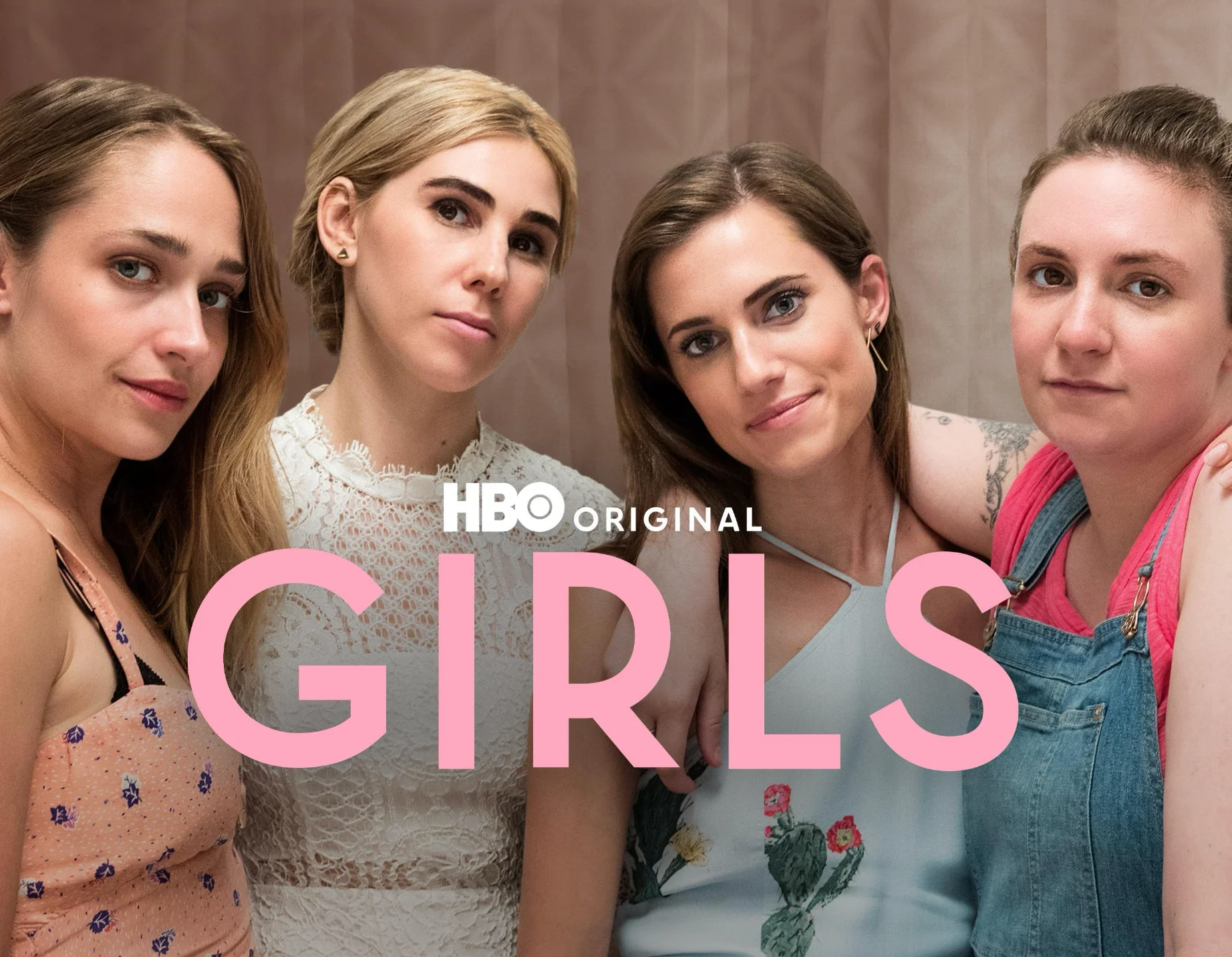
I found my voice through this show called Girls by Lena Dunham (2012). A lot of people are rewatching it right now, including myself. Not that it wasn’t famous at that time, but now it feels like a gem. The show is still so relevant, especially with Gen Z. You’re so lost, you’re so confused, the intimacy…
Everything in Girls was just so raw and not-so-fairytale-ish: so real and funny and witty and comedic and so messy.
Exactly how our lives are. When I [first] watched it, I was a teenager; I’m 27 now.
She was a one-woman army, Lena Dunham. She was writing it, she was directing it, she was performing it. The amount of discipline that might require is just insane and it’s really inspirational for me to see that.
TTE: What was your relationship with Hindi cinema, when you were growing up?
Bonita: I got into Hindi cinema very slowly. I have not seen a lot; I would say, deliberately so. Sometimes, movies would come on TV — on Sony or Set Max — I used to watch those. But I never really found myself engaged in those films.
There are some Indian films that really stood out for me, like English Vinglish (2012), Queen (2013) and Aiyya (2012) starring Rani Mukherji, which I think is the biggest gay icon film.
Then, I started researching Aparna Sen movies, older movies like 15th Park Avenue (2006), the one she did with Konkona Sen. Then Mira Nair came along. I used to research all these films, download them and force my sisters to sit with me and watch them. We would really enjoy all those films by the end.
TTE: Which part of your dating experience did you bring into your film?
Bonita: When I started transitioning, I was a newbie on the dating scene. Because of the hormones, my features started changing. I was gradually ‘becoming’ more of a woman and the dating app experiences started becoming less bad.
I would get matches. Guys text, compliment, love-bomb you. But when they sense rejection, they start to feel like, “Who are you? You should be glad that I’m even talking to you, you know, you’re a trans woman… What do you think, that you’re a real girl?” Rejection triggers a lot of anger within men and they come back and cuss, or say a lot of bad stuff.
On the other hand, literally nobody knows what trans is (laughs).
They feel like I owe them an explanation about everything from the start.
From when I was born, to what my parents said, to how I transitioned, to what hormones I’m on, to what surgeries I got — everything. The men go from “Oh, I really love you, you’re so amazing, you’re so pretty,” to “I don’t know anything about being trans. So, instead of me googling, why don’t you, who’s lived this experience, tell me? Who would be a better teacher for me than you, who’s known it all?”
Men on these apps have been so outright about asking me about my privates. And you know what? If you’re engaging with me physically, I agree and accept that it does matter to you, but it’s the way you say it! A lot of people just don’t have decency, even if they like you or have no intention of being bad.
Par tameez se kaise poochh sakte hain? (But can it be asked with respect?) ‘Dick or vagina?’ It’s such a simple question. They’re so insensitive about it.
It was actually very difficult for me to encapsulate all those experiences into one short film. I tried to sprinkle a little bit of this, a little bit of that and make a recipe with all these ingredients — and then make a character.
I have trans girlfriends and we share our experiences, and that really helped me too. I tried to create something like a wholesome meal. It’s not all of it, but it’s some piece of it, is what I can say.
TTE: There’s a version of you that roams the online, and another that’s living offline. Then there’s a third version that you play in films written by you or someone else. What is the correlation between these three versions of yourself?
Bonita: Online, there is an abundance of experiences. In the beginning, I would just post anything and speak my mind. I would have these big fights in the comments sections. If you’re going to keep your account public, you will be exposed to the media and to other people. You have to prepare yourself for bad comments or good comments. Sometimes, the bad comments are too much. After a point, the internet just became too much. It was just this never-ending, constant strain that was taking over my mental health
[Offline] I would be so excited to go out by myself, roam around in the night and wear whatever I want. But as I grew up, I felt like I needed to take more responsibility for my safety. Especially when you have some incidents and you feel like okay, what happened here? How can you avoid it next time?
My mother used to say to me, jaisa des waisa bhes (dress like the country you are in).
Your internet life and real life are very different. Like, if I follow an influencer who is an ally, I can’t adapt their lifestyle or their ideologies in Rajasthan or Vadodara. If in my village, they have certain rules that say you don’t want to be wearing short clothes, you will not be seen in short clothes — I’ll try to watch myself, have less eyes on me, because I don’t want to stand out.
When it comes to the camera, my shooting style is different from how I have seen other people shoot trans stories. In a lot of stories with trans characters, the whole story structure and arc of the character is all about the identity.
Their transness is highlighted and exposed to the max for filmmakers to generate sympathy or some sort of emotion, any emotion — disgust, fear, horror or misery.
The human behind that story remains hidden.
Whenever we see these stories in the media and are not okay with them, it should push us to do something about it. To try to see how you can make a change, how you can contribute to make it better. If it’s something that bothers you so much, how are you going to act upon it? How do we change this gaze?
My sister was shooting the film, and she knows me to the core. It was so easy for me to collaborate with her. We came to a point where I was seeing the film through my sister’s gaze, which was so different from how I see myself through other people’s gaze.
TTE: Tell us about the character Jeevan in your film. He barely thinks of Kusum and himself as potentially being committed partners, despite them living together. Meanwhile, you get the sense that Kusum sees a serious future with him.
Bonita: Jeevan… (laughs) Kusum is young, and Jeevan is young. Kusum is also lost and confused. And because she has been rejected so much, she’s craving this constant thing that her other girlfriends have, which is to have a guy who calls her a girlfriend.
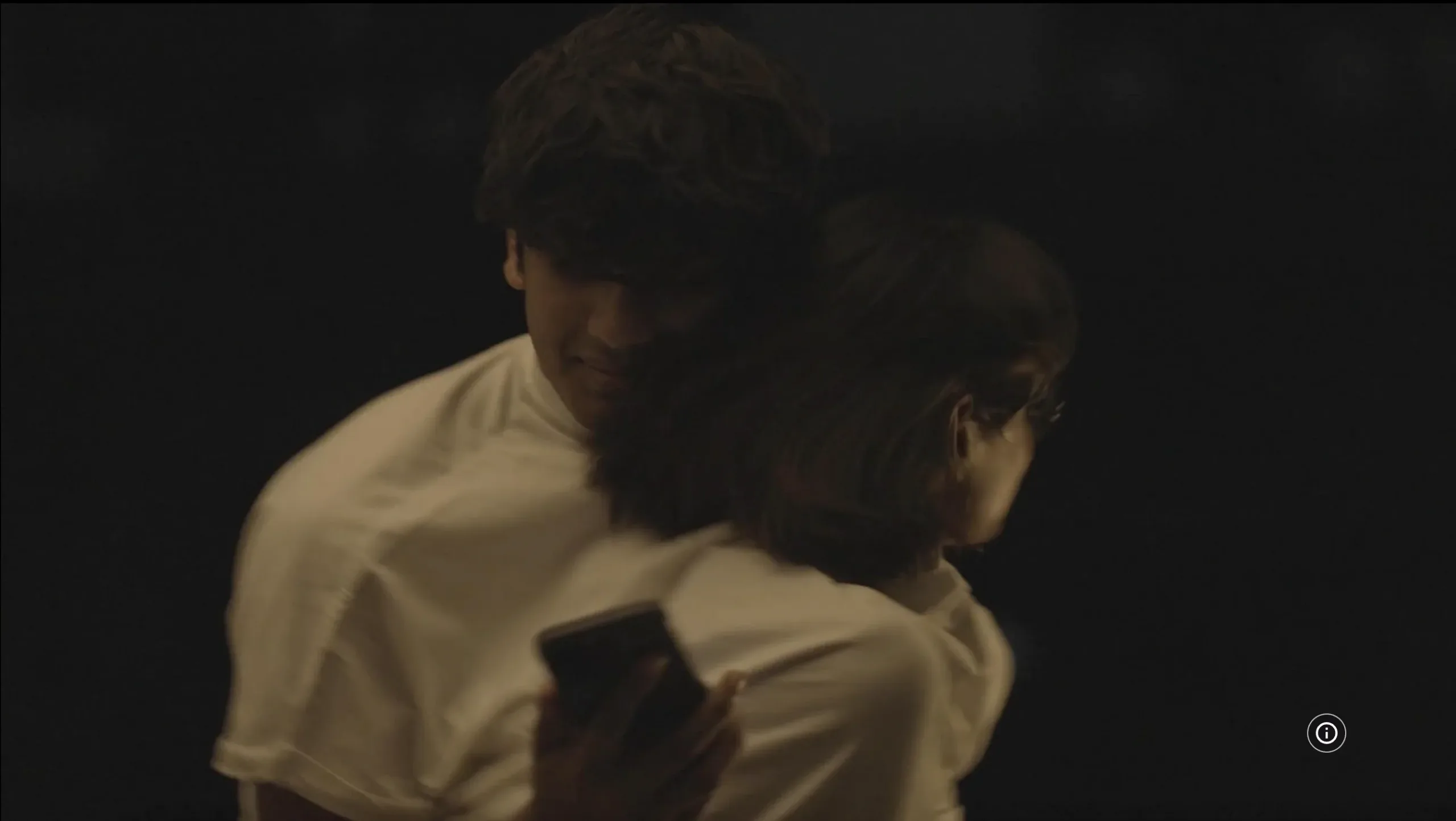
In the beginning she’s trying to find the guy who would be the potential one for her. She thinks that Jeevan’s a hunk and more like “I might never have a shot with Jeevan.” She underestimates herself, but eventually the scene goes further. They enter a relationship and get comfortable. They start living with one another; but for Kusum, it’s just not enough. She wants more.
She might even be hurrying things up. She doesn’t know him, she’s not very sure if she wants him or not. But she just wants this thing — being owned by a man or being with a man, being accepted by a man so he can affirm her womanhood.
She can be like, “Okay now I am a normal girl because a man desires me.”
It's this whole space of confusion and desire and not knowing what you want.
[Sometimes people might not] say that they’re poly but they’re practicing polyamory… I think everybody wants to be poly when it comes to themselves, but when it comes to their partner, they don’t want them to be poly. They would call it infidelity.
I’m not saying these types of relationships are good or bad, but I feel like we all are just getting more and more confused. It’s become so accessible for us to meet people. Physical intimacy has become one call away, one text away. The easiest thing to do on a dating app is to get laid.
Because of that, we keep on feeling like, “Okay, I can always get someone better. I can always do better. Even if this guy or this girl is perfect for me, I’m having a good experience, but you know what, I can still do better.” And this sense of being settled never really comes. We keep feeling more and more alone within ourselves, but we don’t realise the reason behind it.
TTE: So much of your film is about gender as a performance, and your character Kusum navigates both external demands and internal truths. As you enter the film industry, what about this performance do you want to do differently, as opposed to what the current media representation is doing?
Bonita: Sometimes, for me too, it becomes difficult to make transness different. I consume so much content. Whatever I watch about being trans gets into my head, and then it shows up in my writing. So, it is very important for me to detox from it, which becomes very difficult sometimes.
I have been able to find so many ways to speak for a character in a series that I’m writing [now]. It’s going to be a very brand-new way of telling Kusum’s story. When you really treat the characters like a person and not just as ‘a trans character’, that’s the beginning. We all forget the very basic thing: we are all human beings and have the same emotions of jealousy, contempt, pity…
We tend to create characters who are trans but not characters who happen to be trans, so that transness is simply a part of their identity.
But apart from that, who are they? Who am I? Who are you? What are the things that define you, how would you define yourself? How would you be like to defined? These are layers that all of us have. I’m trying to tap into that and bring it out in the stories.
TTE: As a writer you draw so much from your life and people around you. Do you worry you might be revealing a lot about people you know? What is difficult for you to write? And when it lends itself to performance, how do you convey it to the actors you worked with?
Bonita: (laughs) I was not prepared at all. You have to be very vulnerable, actually, you know? In the beginning, I was a little insecure… Okay, I have written it, but how will it sound? It’s this thing about cringe-ness, you know? But now I think cringe is really, really great. We don’t get to see [the cringe] very often; we need to let it out.
You need a collaborator who understands what you’re trying to say, who gets your vision. Because one cringe scene can be seen in many ways. I have one of the best producers, Dhruv Solanki who is always pushing and motivating me to do these things.
When you’re writing, your full focus has to be the story. You can’t be thinking about the performance. We got the script shortlisted and everything, and I was like f***! What do I do now? How am I going to perform all these scenes? Everybody, including myself, [was] worried about how we were going to brief the actors.
But what about me? Who’s going to brief me? Who’s going to give me the pep talk? I have to play this strong hero who’s got it all figured out.
As a director-actor, you have to be the comforter and you have no way to comfort yourself.
You don’t have any other director to tell you, this is how we’re going to do it.
Even after having an intimacy coordinator, it was difficult. The actors were scared: “I might do something or touch her somewhere which she might not like, which might go overboard,” and I was also thinking the same: that I might do something that is not appropriate. In performance, I think you have to build some sort of a friendship with the actor. We did have an acting coach who became our intimacy coordinator.
I was happy that a lot of the cast and crew were my friends, but at the same time, friends don’t take you seriously. They don’t see you as a director. They just see you as you, and it can be really tough to be stern and be like, okay, you have to listen to me, you don’t perform like this, you have to do it like this. Once you build this friendship, this comfort with one another, you can discuss everything.
My mantra for intimacy scenes in any film, is to get done with it; not to extend the whole thing. I get that for a lot of people intimacy does become a big deal. For me, if it’s a big deal, let’s just finish it, let’s just wrap it up. Do what needs to be done. When you are performing, you have to completely detach and just do what’s required for the film and the story. That is something I learned in my Love, Sex Aur Dhoka 2 workshop [with Dibakar Banerjee]. Some workshop experiences really helped me get there.
TTE: How has the film been received? Any interesting responses? What are people from different generations saying?
Bonita: We did a screening at Mumbai PVR. It was the competition for female cinematographers at the Flare Cinematography Film Festival, and there was a senior woman in the audience, between the age of 60 and 70. She was like, “You know, I really liked the film. It was so different, the world has changed so much.” I think she was also confused, like who… what am I? But all I could see in her was that she was there with me. She had this sense of solidarity [that said], ‘I’m here with you and I understand what you feel.’ Even if she didn’t understand what was going on in the film, she could still feel that [Kusum] doesn’t deserve what she’s going through. Her face was like, “I’ve never seen something like this.” That really stayed with me. I was honestly so happy and thrilled to get such a response. Whenever I undermine myself, I think people really help me find my direction.
I was not really trying to make this film relatable. It was more about… the reality I know.
The film ended up speaking to a lot of people, a lot of guys, a lot of girls; queer, not queer; everybody. That was magical. It was not just a piece of queer life. I’m glad they found moments of sympathy or whatever else — hatred, disgust or horror. When people were laughing at something that was said in the film, it made my day. They get you when they get your style, your intention. It’s like, if you know, you know — you know?
And they do know! Yesterday I was watching a lot of films from the [International Film Festival of Rotterdam], because my sister had this account on it. After watching them, I rate them on Letterboxd. Suddenly in front of me: iykyk! And oh my god, the reviews had doubled. I thought to myself: people really believe in my voice. I need to start working even more. I need to make my process faster. Some of the details that people picked out in the film were just incredibly amazing. People really do pay attention.
You can now watch iykyk, directed and starring Bonita, live on brewtv.
For more films made by trans filmmakers, look at this exhaustive list on Letterboxd, and some smaller curations by Out Magazine and Sundance.
Bonita Rajpurohit is an actor and filmmaker best known for her role in Love, Sex aur Dhoka 2 by Dibakar Banerjee. Born in Rajasthan, she started as an actor with It’s All In Your Head (2023), later writing and directing her debut short iykyk (if you know you know, 2024) that was nominated for 3 Critics’ Choice Awards and won under the Best Emerging Filmmaker category at KASHISH Film Festival. Her second short We Can Hear the Same Music, was made as a part of the NFDC 48-Hour Filmmaking Challenge and is currently streaming on Amazon Prime. Her work has been screened at BFI Flare, Tallinn Black Nights, Frameline, Iris Prize, DIFF, among others.
-
The Third Eye is being written and developed by a team of educators, documentary filmmakers, storytellers; people with extensive experience of gathering narratives, oral histories and developing contextual pedagogies for the rural and the marginalised.